
Bread
Raven Lucien
In this iteration of our lives, I am 36 on Turtle Island, and you turned 76 today in my hometown, which is being bombed, and here, brunch is a thing. Your hometown is miles northwest of mine. You moved there when you were married off to your cousin, my grandfather, at fifteen. We still went back every summer, staying with your mother for a few weeks. We would take the same night bus you took to move to the city and drift off while it tore its way through the pitch black night, carrying us back to the place where your language meant something.
In the familiar melancholy of your hometown, curiously named “Mirage” a taxi would drop us off at your childhood home. By city standards, that house made no sense to me. To walk by the outhouse in the yard and go up a few stairs broke all my logic. Outhouses did not live in my urban language, whereas stairs inside a house were so lavish. Only the rich kids at school spoke of ‘upstairs,’ but I was certain they never froze their toes on the way to the bathroom at midnight. We lived in a tiny apartment in the city, no stairs and no outhouse.
Your mother, whom we weirdly called Miss Aunt, would be standing by the stairs, anticipating us. She’d mumble something in my ear while giving me kisses on the cheeks: right, left, right. I’d avoid inhaling through my nose because her breath held the stale scent of old cigarettes, and I wonder if three kisses meant one side of my face would be eternally heavier. I understood her, but couldn’t fluently respond in her language, just as you understood me but couldn’t fluently respond to me in Persian. I would race up the stairs, and the living room would open itself to me. Persian rugs, maroon and navy, lined the floor, warm and worn, their flowers swimming like a pond full of koi. Backrests lined the walls in the same pattern. Nothing else.
I would glide along the edge of the plastic sheet spread in the middle of the room for breakfast, then arrive at my favorite part of the house: the greenhouse with blue tiles, no plants, soaked in diffused daylight. It would become my room for the rest of the stay, my aquarium swallowing me in a different medium. The adults stayed outside, reassured I was within view while there were oceans between us.
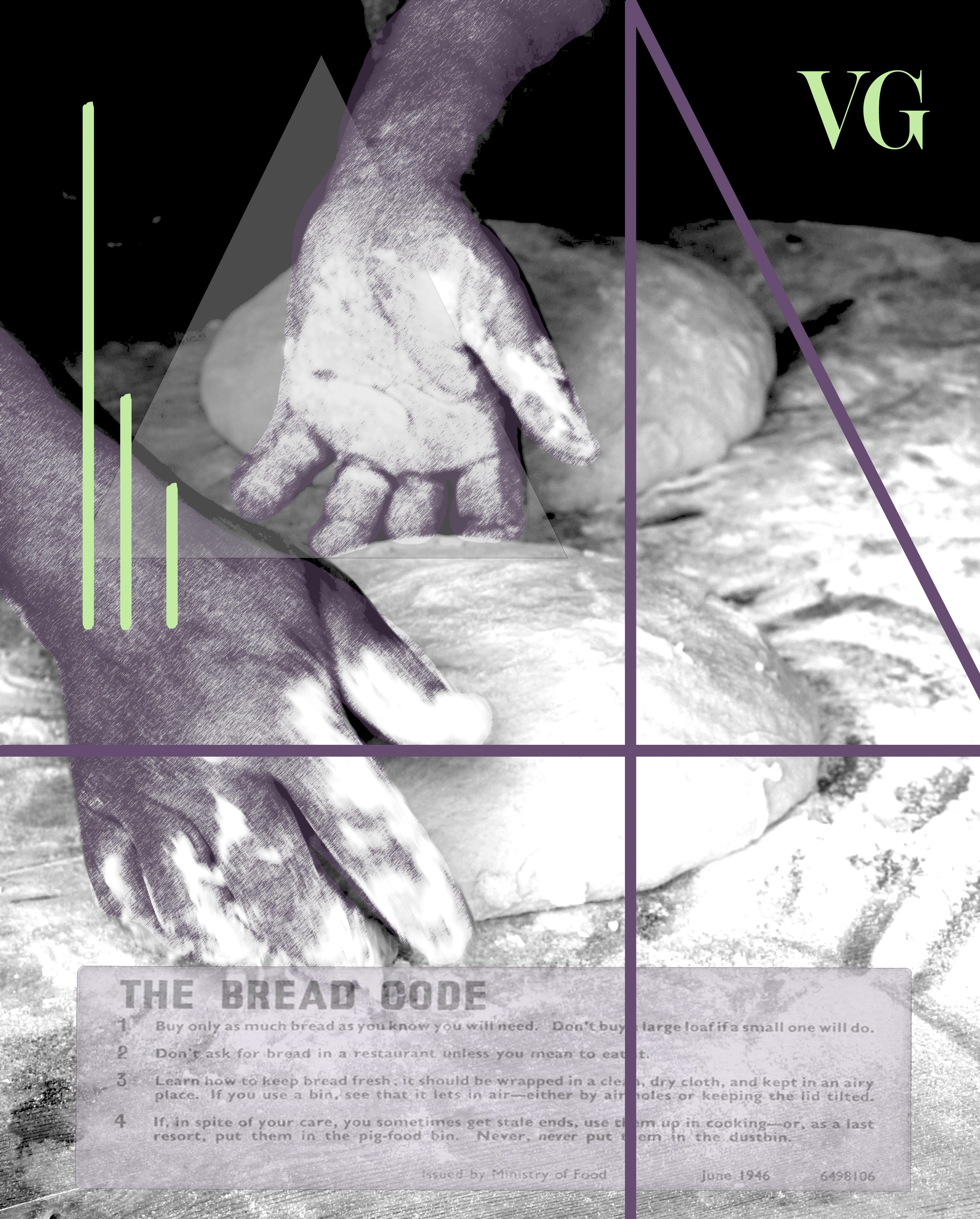
My mom would reel me back in for breakfast with a loghmeh, a small, bite-sized sandwich from the spread. The bread was always barbari, blistered and crisp on the outside, pillowy within, with deep grooves running along its length, natural seams for claiming your piece. Nearly two feet long, there was enough for everyone, but while the adults caught up, I angled for the rounded edges, the pillowiest of them all. I’d tear the chosen edge and smear some fresh local cheese in there using my thumb and add half a walnut on top before gobbling it up. The salty cheese, the buttery walnut and the gritty barbari all softened in my mouth and gave me the taste that became my childhood.
I keep barbari in the freezer. I buy it from a city on the western periphery of mine, when I have enough time to drive there. Before the war, before the telephone lines were cut, I would call you, coffee cup in hand, and you would ask, ‘Have you eaten breakfast?’ I would assure you I would, right after I finished my homemade cappuccino. Then I’d walk across my living room, over a faded, Persianesque beige rug, pull a frozen slice of barbari from the freezer, and air-fry it until fragrant. I’d stand in the kitchen and make myself a loghme, using the techniques I had mastered long ago, while listening to a podcast about how AI will swallow us whole.
Today I drove west and replenished my barbari reserve, with Tamino singing Dissolve all the way there and back. It was Nowruz. I wished you a happy new year and a happy birthday inside my heart, knowing your real birthday is not today, and has been entrusted to oblivion. You were one of ten children, and Miss Aunt never kept track.
During those visits, your favorite brother out of five would make sure to bring you the clotted cream you missed in the city, and honey in the comb from local beekeepers. I never took to the clotted cream, but I would cut off a bite of the comb with a spoon. It became a small mission of mine to chew all the honey out before spitting the wax ball.
Impatient to wash the thick sweetness of honey from my throat, I’d ask you for tea. You would spring up, your knees still allowing you that kind of agility then, and head into the kitchen. I’d follow. You would reach for the teapot atop the samovar, pour some black tea into a glass, and dilute it with hot water until it turned a pale amber. I’d bow my head over the cup and inhale the cardamom steam. If I were impatient to drink it, I would test it with the tip of my tongue.
When it was still scorching hot, as good Persian tea is supposed to be, you would deftly pour some of it into the saucer, wait a few seconds, still carrying on a conversation about a distant cousin in the village, then pour it back into the glass, once, twice, three times, until the heat softened.”
In Canada, the default black tea is Orange Pekoe, something I learned quickly during graduate orientation, in a bar, when I was cold and wanted to warm up with tea. I no longer order black tea when I’m out. At brunch, I get coffee, regular, drip-brewed, with refills. I ask for cream, which they bring in single-use containers. The cream slides into the cup, sinks to the bottom, then swirls back up, giving me a moment of break from the conversation as I watch the black coffee bloom.
Today, I was jolted awake at 4:00 a.m. with a sense of urgency. I checked my phone for a missed call from ‘Grandma,’ because that would mean it was one of those days when outbound calls miraculously go through. Realizing you hadn’t called, I rolled onto my back and stared at the air hanging above me.
I thought of you as a young girl and wondered if you were ever sent to the bakery to pick up a few barbaris, or if that kind of morning errand was reserved for the brothers. I pictured you pulling your floral pants over your long johns, layering on a sweater, afraid that if you lingered, someone else might be given the task.
I wondered if, in your teens, you wore the floral dresses you love so much now, and what color your hand-knit wool vest might have been. I could see you wrapping a floral scarf around your hair as you slipped out the door. You would walk past the howling stray dogs, the way you did when I was with you, your breath taking the shape of wolves in the cold air.
You would hand the baker a coin and say, ‘Give me one with lots of sesame.’ Then you would take the still warm bread and hold it against your body as you made your way home. I try to imagine what it was like for you, living in the long shadow of the Cold War, waiting for your trucker father, the only kind adult in your life, to return from the Soviet Union. The image fades. I fall back asleep, hoping that when I speak to you again, I can ask if any of it was true.
Raven Lucien is a queer immigrant scholar and writer whose work examines diaspora, belonging, and the liminal spaces between identities. Their poetry navigates the intersection of cultural displacement and embodied experience.